
The Vertiflex Procedure
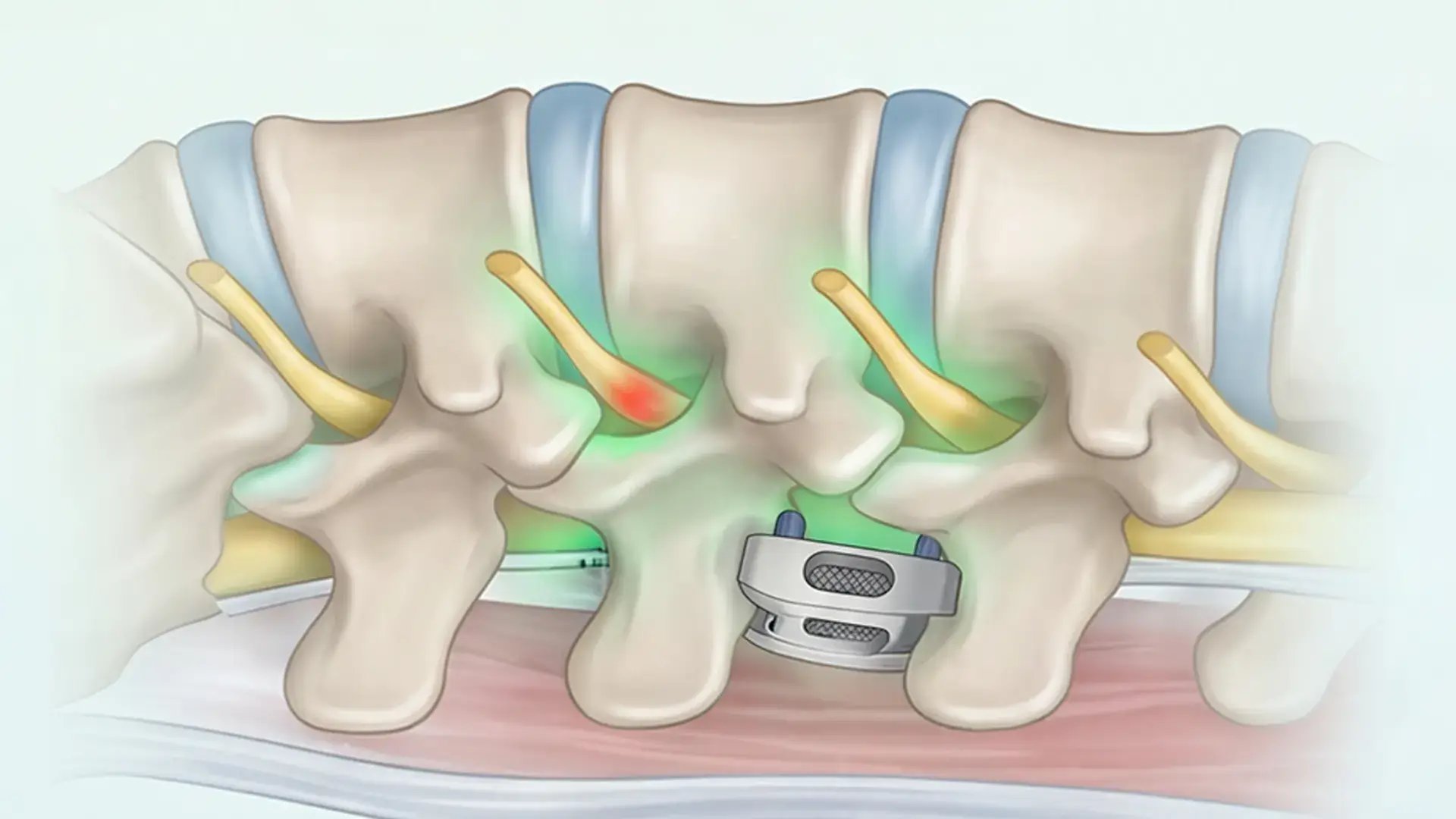
When the spinal canal narrows due to degenerative changes, spinal stenosis can result, putting pressure on nerves and causing pain, numbness, tingling, and/or weakness in the lower back and legs. These symptoms often make everyday activities, like walking or standing for long periods, painful and difficult.
Fortunately, there’s a non-surgical treatment that can help. The Vertiflex procedure, which was FDA-approved in 2015, helps reduce pain, improve mobility, and allow patients to stand and walk comfortably again, all with a quick recovery and long-lasting results.
What is the Vertiflex Procedure?
The Vertiflex procedure is a minimally invasive, outpatient treatment that involves the placement of a minor, titanium interspinous spacer between two vertebrae in the lower back. The procedure begins with a tiny incision, through which the spacer is carefully inserted using a specialized delivery system under fluoroscopic (X-ray) guidance.
Once in place, the spacer expands to gently separate the vertebrae, relieving pressure on the spinal nerves by holding the spinal canal space open when standing or walking.
The Benefits of the Vertiflex Procedure
The Vertiflex procedure offers several benefits over traditional spinal surgery by providing lasting relief from lumbar spinal stenosis, avoiding the need for bone removal (laminectomy), spinal fusion, or long recovery times.
Other benefits include:
- Significant reduction in lower back and leg pain
- Improved ability to stand and walk for more extended periods without discomfort
- Reduced numbness, tingling, and weakness in the legs
- Minimally invasive approach with a faster recovery compared to surgery
- Preserved spinal motion without the need for fusion
- Decreased reliance on pain medications
- Long-term pain relief with results lasting five years or more in many cases
- Improved quality of life, allowing patients to return to daily activities with greater ease
Vertiflex provides lasting relief from spinal stenosis symptoms for many individuals, helping them move freely and comfortably without major surgery.
Conditions Commonly Treated with Vertiflex
The Vertiflex procedure is recommended for treating mild to moderate spinal stenosis. Patients having persistent lower back and leg pain without improvement with other conservative treatments may be candidates for this procedure.
What to Expect During a Vertiflex Procedure
To begin, the patient is first given local anesthesia and mild IV sedation to ensure comfort before a tiny incision (usually about ½ inch) is made in the lower back. The physician then uses fluoroscopic (X-ray) guidance to carefully insert a small, titanium interspinous spacer between two vertebrae at the spine level.
Once in place, the Vertiflex spacer gently expands, creating space between the vertebrae to reduce nerve compression and prevent the spinal canal from narrowing when standing or walking. Because no bone or soft tissue is removed, the procedure causes minimal trauma and preserves natural spinal movement.
After placement, the incision is closed with a small bandage—no stitches typically required—and the patient is monitored briefly before being discharged the same day. The entire process takes about 30-45 minutes to complete and provides effective pain relief with minimal downtime compared to traditional spine surgery.
Vertiflex Procedure Recovery Timeline
Immediately following a Vertiflex procedure, patients are monitored briefly before being discharged the same day. Mild soreness, swelling, or stiffness at the incision site is normal but typically resolves within a few days. Since the procedure is minimally invasive, most patients experience less pain and a faster recovery compared to traditional spinal surgery.
Patients can usually resume light activities within a few days, but bending, twisting, heavy lifting, and strenuous exercise should be avoided for at least 4 to 6 weeks to allow the spine to heal properly. Walking is encouraged to promote circulation and mobility, and many patients experience gradual pain relief within the first few weeks.
Who is a Candidate?
Veriflex procedures are specifically designed for patients with mild to moderate lumbar spinal stenosis, so it may not be suitable for those with severe spinal instability, advanced spondylolisthesis, osteoporosis, or prior lumbar fusion.
Typically, patients with the following are good candidates for a Vertiflex treatment:
- Diagnosed with mild to moderate lumbar spinal stenosis
- Experiencing chronic lower back and leg pain that worsens with standing or walking and improves when sitting or bending forward
- No severe spinal instability or fractures that require more invasive surgery
- Conservative treatments (medications, injections, therapy) have failed to provide lasting relief
- Seeking a minimally invasive alternative to spinal decompression surgery (laminectomy) or fusion
- Generally in good health with no conditions that may interfere with healing
Vertiflex provides lasting pain relief and improved mobility without the risks and extended recovery time of traditional spine surgery for the right candidates. A non-surgical care solution from Desert Spine & Sports Physicians can help you with pain relief.
Take the Next Step and Get Non-Surgical Treatment for Lumbar Spinal Stenosis
If chronic lower back pain, leg pain, or difficulty standing or walking due to lumbar spinal stenosis has held you back, know that non-surgical care is available. If you’re ready to take the next step toward improved mobility and reduced pain, request an appointment at one of our six convenient locations today.
The board-certified physicians at Desert Spine and Sports Physicians are specialists in Physical Medicine and Rehabilitation (PM&R) and Pain Management, and they will work with you to find the treatment that’s right for you.