If you've been experiencing persistent numbness, tingling, weakness, or unexplained pain, you may have been referred for an electrodiagnostic test often termed an “EMG” for short. An electrodiagnostic test is a highly specialized diagnostic procedure that helps determine how well your nerves and muscles are functioning.
This guide will walk you through every step of the testing process, clarify what you can expect, and help you feel confident heading into your appointment.
What is an Electrodiagnostic Test, and Why Is It Done?
An electrodiagnostic test measures the speed at which nerves transmit signals with nerve conduction studies (NCS) and the electrical activity of muscles with electromyography (EMG). It is commonly used to diagnose conditions affecting the muscles and the peripheral nervous system, including:
The NCS and EMG are performed together to evaluate nerve and muscle function. The NCS uses small surface electrodes to measure how quickly electrical signals travel through your nerves, while the EMG uses a fine needle electrode to assess the electrical activity of your muscles. Combined, these tests help our physiatrists and pain management specialists identify the source of your symptoms, whether related to nerve injury or muscle dysfunction.
How Does an Electrodiagnostic Test Work?
Knowing what to expect can help ease any nerves about your upcoming electrodiagnostic test. Here’s a clear breakdown of what to expect before, during, and after your test.
Before the Test
Before the electrodiagnostic test, your physiatrist will provide instructions, including whether to stop certain medications or avoid applying lotions or creams. There’s no need to fast, but be sure to wear loose, comfortable clothing. Always let your provider know if you’re on blood thinners or have a bleeding disorder.
During the Test
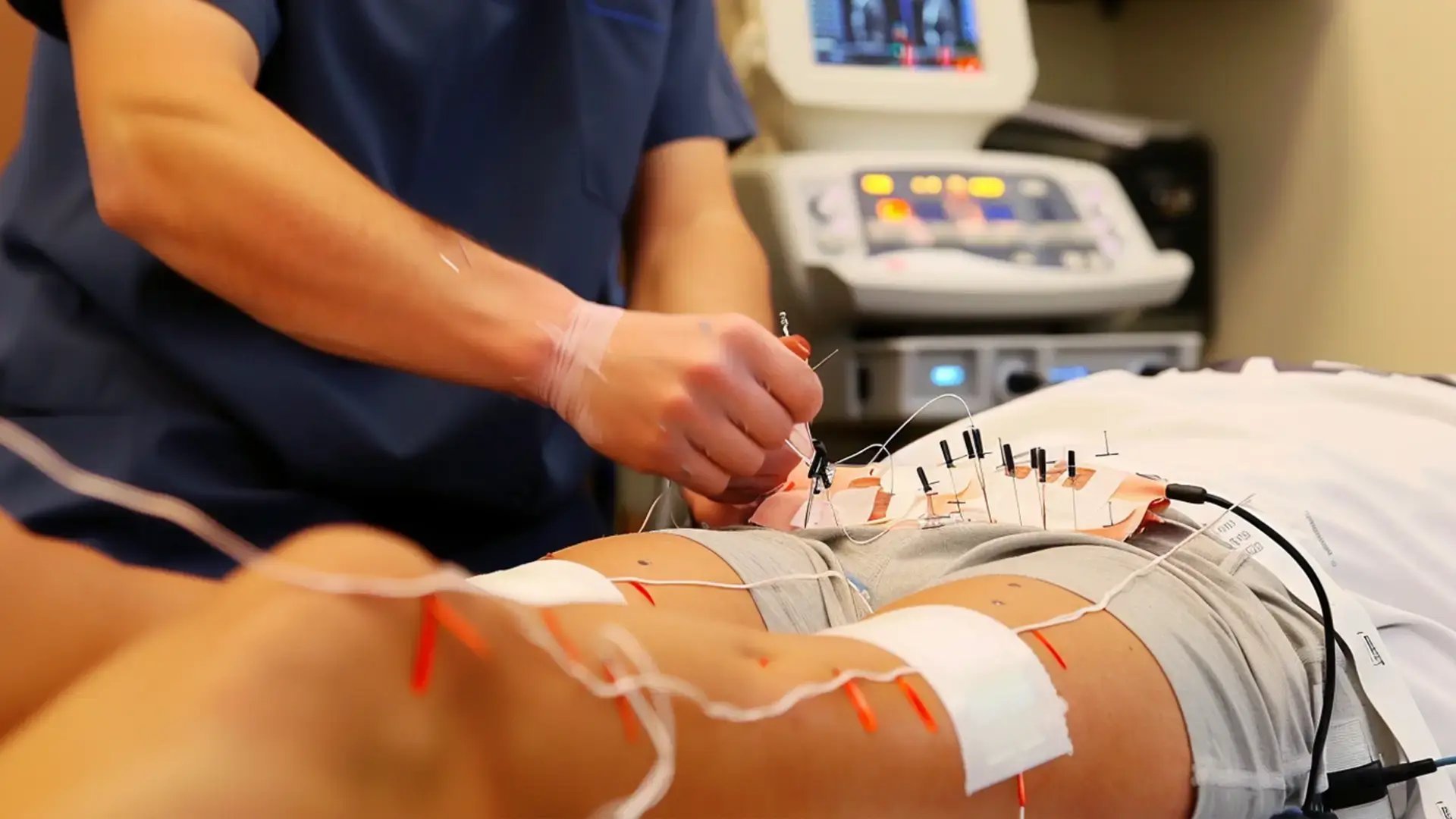
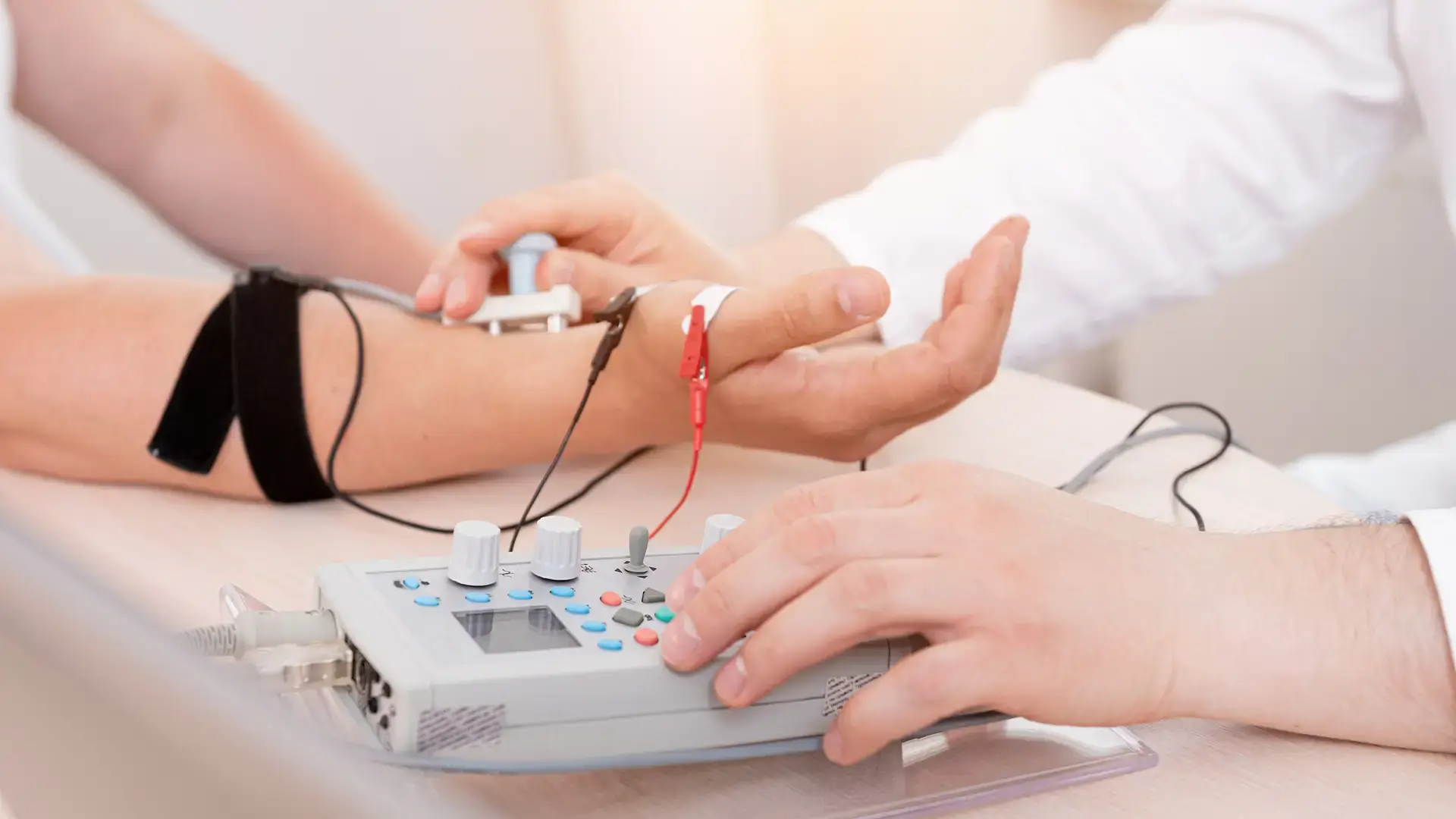
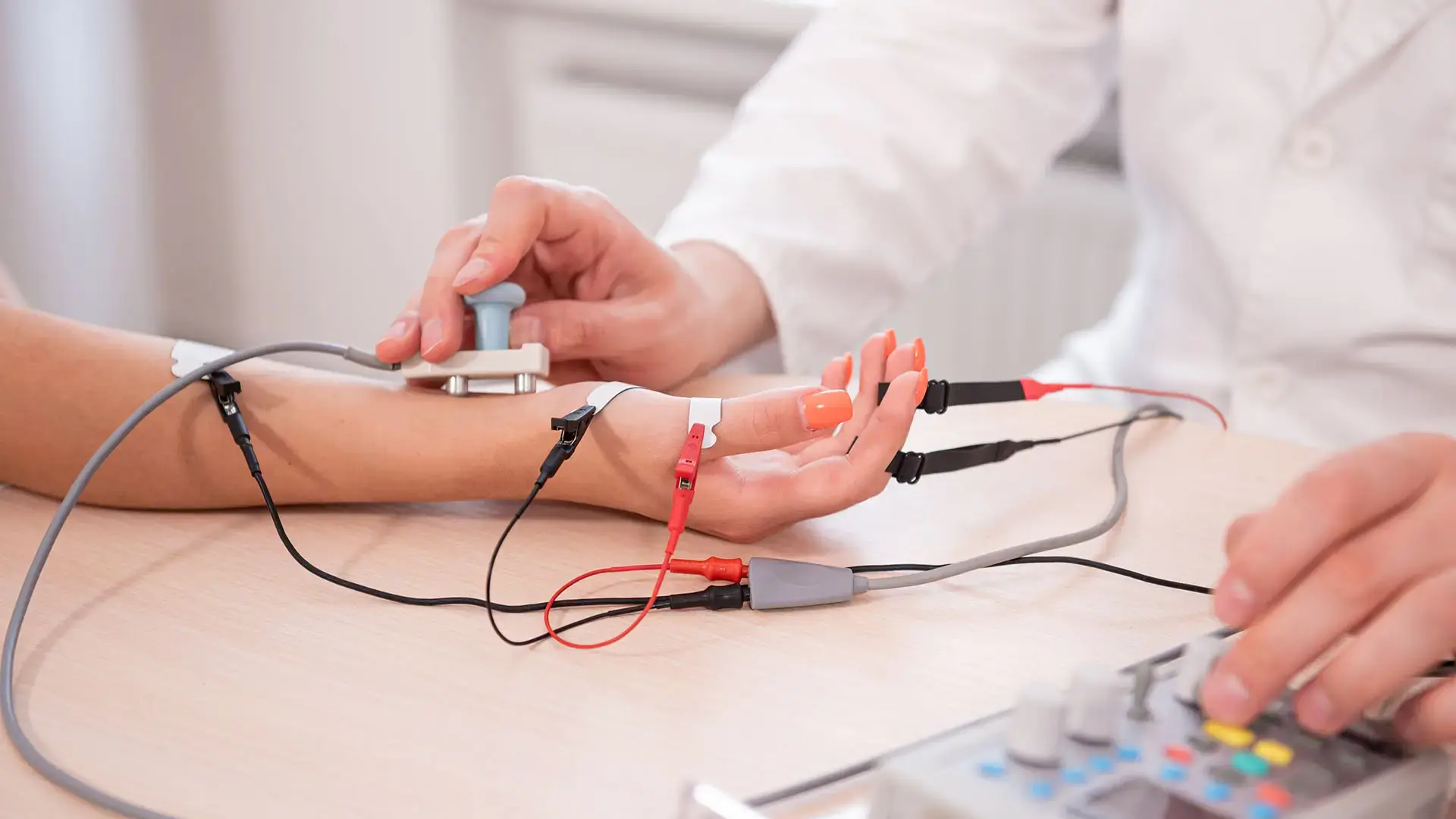
You will first undergo a NCS in which small surface electrodes are placed on the skin and mild electrical impulses are used to evaluate how effectively your nerves transmit signals. During the EMG test, a very thin needle electrode (about the size of an acupuncture needle) is then inserted into specific muscles to measure their electrical activity at rest and during gentle movement. Most patients describe the sensations as a buzz or brief muscle twitch. The full test usually takes between 30 and 60 minutes.
After the Test
Getting an electrodiagnostic test does not come with any required downtime. Your physician will explain the results, either immediately or within a short follow-up window, and discuss next steps.
Does an Electrodiagnostic Test Hurt?
Understandably, this is one of the most common questions we hear. While an electrodiagnostic test does involve mild electrical stimulation and small needle insertions, most patients report that it is not painful but rather mildly uncomfortable for a brief time.
Everyone’s pain threshold is different, but rest assured: the procedure is safe, brief, and does not require any anesthesia or sedation. Your provider will guide you through each step and can pause the procedure if you need a break.
Understanding Your Electrodiagnostic Test Results
Electrodiagnostic results are typically available within 24 to 48 hours. Then, one of our physicians will review the data and explain what the findings mean for you. Common results might show:
- Normal function of the nerve and muscle
- Evidence of a pinched nerve (radiculopathy)
- Signs of peripheral nerve damage (neuropathy)
- Muscle damage
Based on the findings, your care team may recommend follow-up testing, a referral to another specialist, or initiate a treatment plan.
When Should You See a Specialist for EMG Testing?
If you’re experiencing any of the following symptoms, it may be time to consult an electrodiagnostic specialist:
- Numbness or tingling sensations that won’t go away
- Unexplained muscle weakness
- Pain that radiates from the spine into the limbs
- Difficulty gripping or walking
- Chronic nerve or muscle-elated symptoms that you still don’t have answers for
Early diagnosis through electrodiagnostic testing can lead to faster, more effective treatment—often avoiding unnecessary procedures or delayed care.
Expert Electrodiagnostic Testing Designed Around Patient Comfort
At Desert Spine and Sports Physicians, we perform every electrodiagnostic test in-house using advanced tools and protocols. Our fellowship-trained, board-certified physiatrists and pain management physicians are dedicated to delivering high-quality, patient-centered care. We understand the anxiety some patients feel about testing, and we work hard to ensure every evaluation is efficient, compassionate, and informative.
With multiple convenient Arizona locations and quick appointment availability, we make it easy to get the answers you need—so you can stop wondering and start healing. Schedule your electrodiagnostic test today.
 February 6, 2026




.png)