Tingling. Numbness. Shooting pain down the arm or leg. These symptoms can be unsettling—and confusing. When nerve pain strikes, patients are often unsure which test will actually provide answers: EMG/NCS, MRI, or X-ray?
Getting the right diagnosis starts with choosing the right diagnostic tool. Each test plays a distinct role in evaluating nerve-related conditions, and understanding how they work can help you make informed decisions about your care.
Understanding Nerve Pain: Why Accurate Testing Is Critical
Nerve pain can stem from a variety of sources, including radiculopathy (pinched nerves in the spine), focal nerve entrapments such as carpal tunnel syndrome, and peripheral neuropathy to name a few. But not all causes show up clearly on standard imaging. That’s why accurate diagnosis may require more than one test.
The most effective evaluations combine structural imaging with functional assessment. At Desert Spine and Sports Physicians, board-certified physiatrists perform specialized electrodiagnostic testing or EMG/NCS alongside advanced imaging to pinpoint what’s causing your symptoms —and how best to treat them.
What Is an EMG (Electromyography) and Nerve Conduction Study?
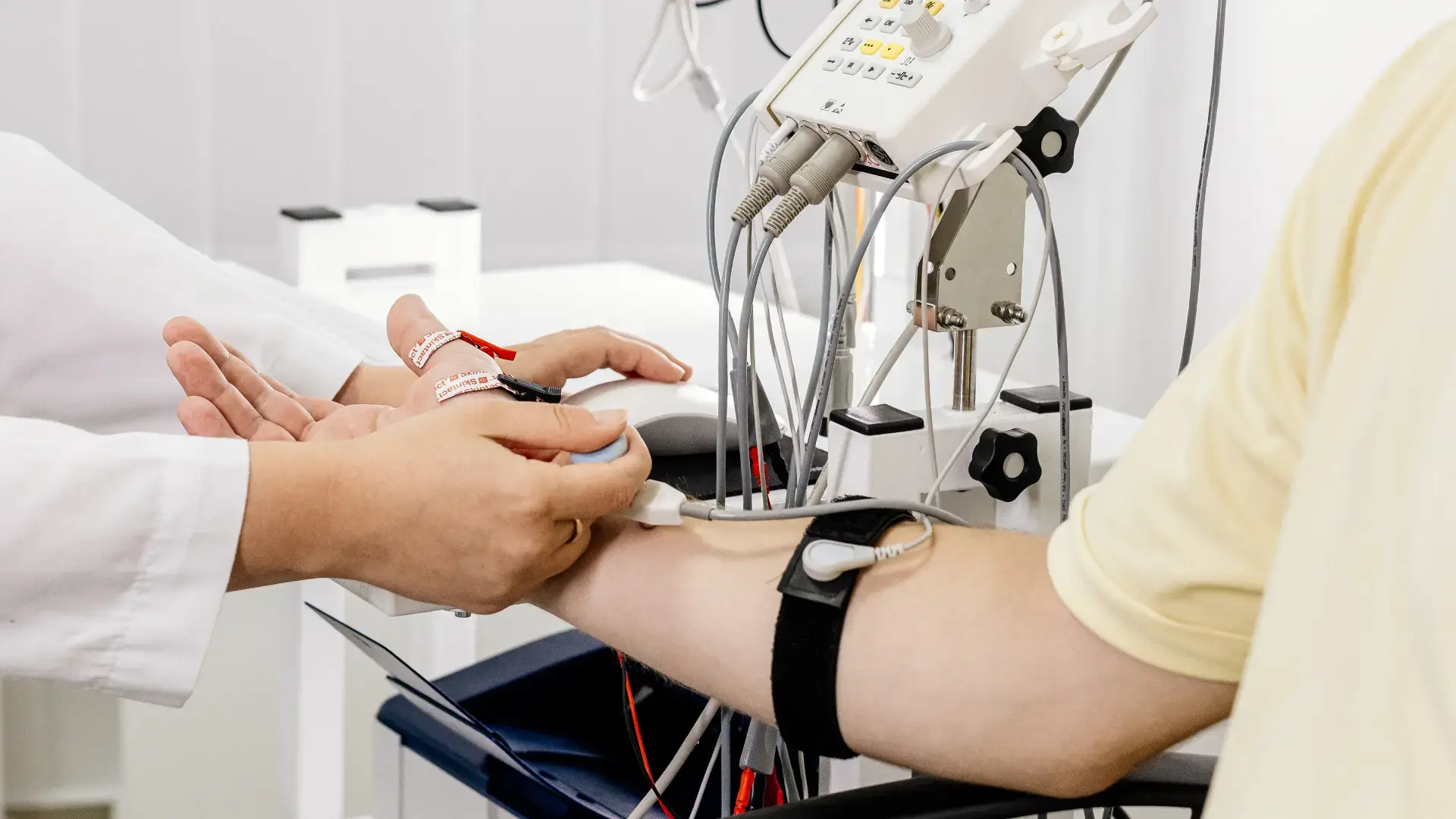
An EMG and nerve conduction study (NCS) evaluates how well your nerves and muscles are functioning. Small electrodes measure electrical activity in muscles and how quickly signals travel through your nerves.
EMG/NCS can diagnose conditions such as:
- Radiculopathy (cervical or lumbar)
- Carpal tunnel syndrome
- Ulnar neuropathy or cubical tunnel syndrome
- Plexopathy (brachial or lumbar)
- Peripheral neuropathy
These tests are especially valuable when symptoms don’t match what’s seen on MRI, or when additional clarity is needed before proceeding with treatment. Unlike some practices, we perform all electrodiagnostic studies in-house by the physician, not a technician, ensuring accuracy and rapid turnaround on results.
What Is an MRI (Magnetic Resonance Imaging)?
MRI (Magnetic Resonance Imaging) utilizes a strong magnetic field and radio waves to produce detailed images of soft tissues within the body. It is highly effective at identifying:
- Herniated or bulging discs
- Spinal stenosis
- Nerve compression
- Tumors or structural abnormalities
While an MRI shows what might be pressing on a nerve, it doesn’t confirm whether that nerve is functioning correctly. That’s where electrodiagnostic testing complements MRI: by measuring how well the nerves are actually working.
What Is an X-Ray?
X-rays provide clear images of bones and joint alignment. They’re often used as a first-line test to:
- Identify fractures
- Assess spinal alignment or scoliosis
- Detect bone spurs or advanced arthritis
However, X-rays don’t show nerves, discs, or soft tissue. Their role is typically to rule out major bone issues before proceeding to more detailed studies.
EMG/NCS vs MRI vs X-Ray: Comparison Chart
| Feature |
EMG/NCS |
MRI |
X-Ray |
| What It Shows |
Nerve & muscle function |
Soft tissues, discs, nerves |
Bones, fractures, alignment |
| Best For |
Pinched nerves, neuropathy |
Herniated discs, stenosis |
Fractures, arthritis |
| Invasive? |
Minimally (small needles) |
No |
No |
| Radiation? |
No |
No |
Yes (minimal) |
| Time Required |
30–90 minutes |
30–60 minutes |
5–10 minutes |
| Results Turnaround |
Within 48 hours (at DSSP) |
Typically 2–3 days |
Same day |
When Do You Need Electrodiagnostic Testing (EMG/NCS)?
You should consider EMG/NCS if you’re experiencing:
- Persistent numbness, tingling, or burning
- Muscle weakness or atrophy
- Shooting pain down arms or legs that hasn't resolved
- Arm or leg symptoms affecting work or daily life
Electrodiagnostic testing is also essential in certain clinical scenarios, such as:
- When your MRI is normal, but symptoms persist
- For determining which nerve is affected before surgery or injections
- Differentiating between spinal nerve issues and peripheral nerve damage
- For monitoring recovery after a nerve injury
- Diagnosing neuropathy or entrapment syndromes
When Do You Need an MRI for Nerve Pain?
MRI is often the next step when symptoms include:
- Radiating arm or leg pain (radiculopathy)
- Suspected disc herniation
- History of trauma or spinal injury
- Bowel or bladder changes (a red flag requiring urgent attention)
- Evaluation before interventional treatments, such as epidural steroid injections
When Is an X-Ray Sufficient?
X-rays may be enough if:
- You recently experienced trauma and need to rule out a fracture
- There's a concern about scoliosis or structural spine issues
- You’re being screened before more advanced testing
While helpful for identifying bone-related concerns, X-rays are rarely definitive in diagnosing nerve pain. Therefore, if nerves are the suspected cause of the pain, additional tests are usually needed.
Schedule Nerve Testing in Phoenix, AZ
If you're experiencing persistent nerve pain, numbness, tingling or weakness, getting the proper test is critical. While X-rays and MRIs help identify structural issues, only EMG and nerve conduction studies, such as those conducted by our physiatrists including Dr. Brian-Lamar Brice, evaluate how your nerves are actually functioning.
At Desert Spine and Sports Physicians, our board-certified physiatrists and pain management specialists use these tools in combination to deliver fast, accurate diagnoses and create treatment plans that work. If you're unsure which test you need, or if you're ready to move forward with electrodiagnostic testing, contact us today to schedule your consultation. We’re here to help you find answers and begin your healing journey.
.png?width=1920&height=1080&name=EMG%20vs%20MRI%20vs%20X-Ray%20(1).png)

 January 30, 2026