Lateral hip pain is one of the most common complaints we see in musculoskeletal medicine. Whether it wakes patients at night when lying on their side, slows them down on a walk, or limits their ability to climb stairs, greater trochanteric pain syndrome (GTPS) can be genuinely disabling. Yet for many years, the condition was poorly understood, dismissed as simple "hip bursitis," and treated with a cortisone shot without any further thought. That approach is increasingly outdated.
We now understand that GTPS is primarily driven not by inflammation in the hip bursa, but by damage to the tendons that attach to the outer part of the hip. This is called gluteal tendinopathy, and the distinction matters enormously when it comes to choosing the right treatment.
Inflammation-targeted therapies, such as corticosteroid injections, may provide short-term relief but don't address the underlying problem. The evidence increasingly suggests there is a better option.
Understanding Greater Trochanteric Pain Syndrome
GTPS affects up to 1.8 per 1,000 adults per year and is far more common in women, particularly those between ages 40 and 60. The hallmark symptom is tenderness directly over the bony prominence on the outer hip, with pain that worsens when lying on that side, crossing the legs, climbing stairs, or walking. An MRI can confirm the diagnosis and provide a clearer picture of the extent of tendon damage, which helps guide treatment decisions.
The Foundation: Movement and Load Management
Before any injection, the most important step is addressing how the load is placed on the injured tendon. Strengthening the hip muscles through physical therapy remains the cornerstone of long-term recovery, and research has shown that a structured exercise program outperforms cortisone injections at one year (Mellor et al., BMJ, 2018).
For patients who are in too much pain to exercise effectively, or who aren't improving with rehabilitation alone, an injection can help break the cycle and get things moving in the right direction.
Corticosteroid Injections: Short-Term Relief With a Ceiling
Cortisone injections have long been the go-to option for GTPS, and they do work in the short term. A well-designed clinical trial (Brinks et al., 2011) found that 55% of patients who received a cortisone injection had recovered at 3 months, compared with 34% in the no-injection group. The problem is that this benefit doesn't last.
By 12 months, recovery rates were no different between the two groups. A large 2022 review of the available research found that cortisone is not superior to exercise over time. There are also concerns about what repeated cortisone injections do to the tendon itself. Steroids can interfere with the body's ability to rebuild tissue, which is a significant drawback when the underlying problem is tissue breakdown rather than inflammation.
Platelet-Rich Plasma: A Regenerative Alternative
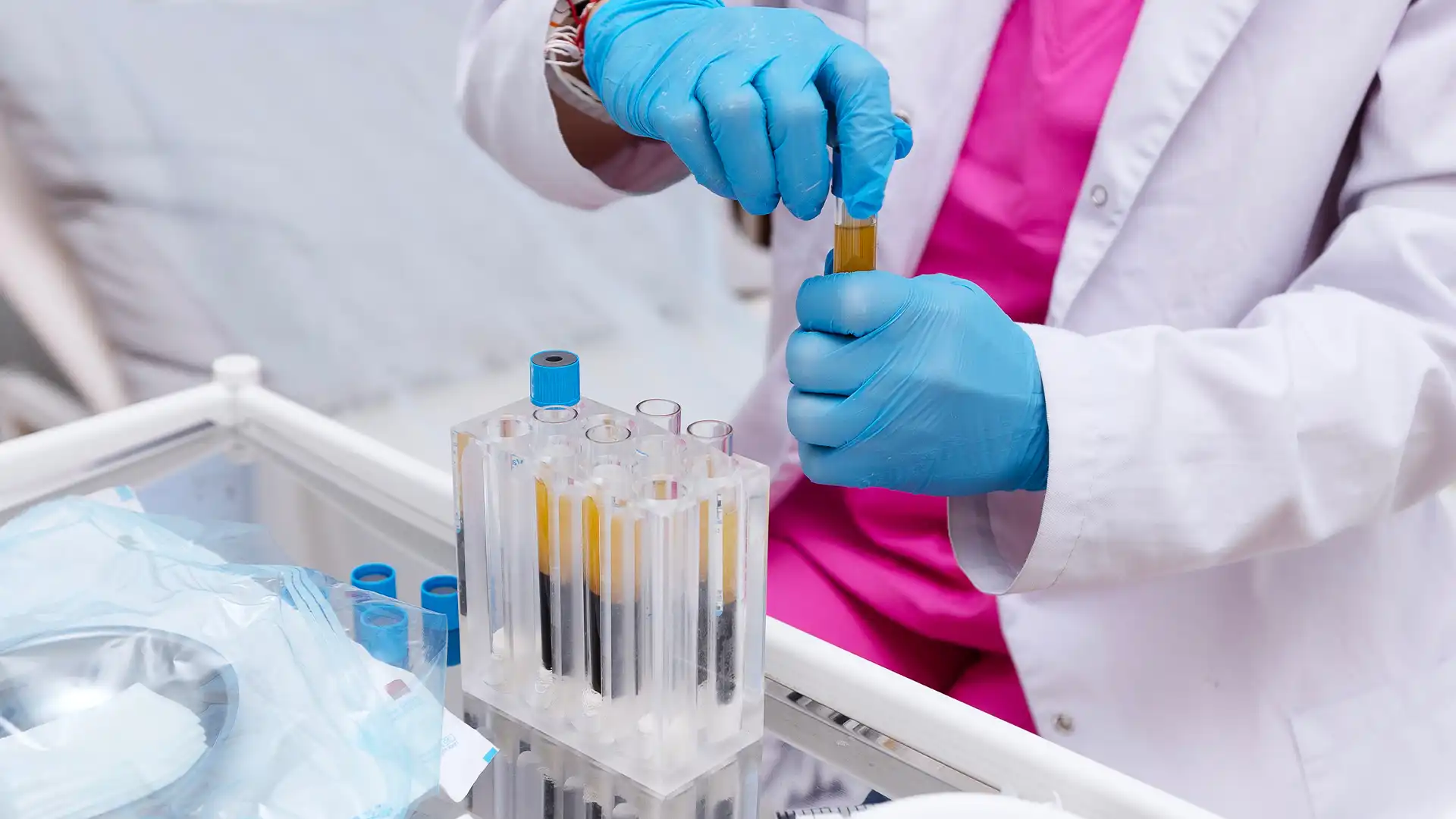
Platelet-rich plasma, or PRP, is made from a small sample of the patient's own blood. The blood is spun in a centrifuge to concentrate the platelets, which are the cells responsible for initiating healing. The resulting solution is injected directly into the damaged tissue. Rather than suppressing inflammation temporarily, PRP delivers a concentrated dose of the body's own healing signals.
The strongest clinical evidence comes from a series of carefully designed studies by Fitzpatrick et al. (American Journal of Sports Medicine, 2018 and 2019), in which 80 patients were selected randomly to receive either a single PRP injection or a single cortisone injection. Both groups improved similarly in the first six weeks, but by 12 weeks, PRP pulled ahead.
At two years, the PRP group had continued to improve while the cortisone group's benefit had largely worn off by six months. Of the patients who received cortisone, 27 out of 40 were considered treatment failures and crossed over to PRP, with meaningful improvement afterward. A 2023 analysis that ranked multiple treatments for GTPS head-to-head placed PRP at the top.
PRP vs. Cortisone: What the Evidence Shows
When the research is put together, a clear pattern emerges:
- Short-term (0 to 6 weeks): Both treatments provide similar pain relief. Cortisone may have a slight early edge.
- Medium-term (3 to 6 months): PRP begins to pull ahead. Pain and function scores favor PRP at 3 months in the highest-quality studies.
- Long-term (6 months to 2 years): PRP significantly outperforms cortisone. Steroid benefit fades while PRP continues to improve, and patients who received cortisone were far more likely to need repeat treatment.
- Tissue health: PRP supports tendon repair. Cortisone, when used repeatedly, can interfere with the body's ability to rebuild damaged tissue.
Who Is a Good Candidate for PRP?
At Desert Spine and Sports Physicians, PRP is our preferred injection treatment for patients with GTPS who have tendon damage confirmed on imaging and who haven't improved enough with activity changes and physical therapy.
It tends to be the right fit for:
- Patients with symptoms lasting more than 3 to 4 months who haven't responded to conservative care
- Active individuals and athletes who want a lasting solution rather than a temporary fix
- Patients who have already had cortisone injections with only short-lived relief
- Younger patients for whom protecting the long-term health of the tendon matters
- Patients with partial tendon tears identified on ultrasound or MRI
Cortisone injections still have a role, primarily as a short-term bridge to get a patient comfortable enough to engage in physical therapy, or when fast pain relief is the priority. We're always transparent with patients that this benefit is time-limited and doesn't fix the underlying problem.
How PRP Is Performed for GTPS
Not all PRP is the same, and technique matters. The injection is performed under real-time ultrasound guidance, so it is delivered precisely to the site of degenerative change rather than blindly into the surrounding area.
Patients should expect a brief increase in soreness for 24 to 72 hours after the injection. This is a normal part of the healing response being activated. Full benefit typically develops over 6 to 12 weeks, and continuing with physical therapy alongside PRP leads to the best outcomes.
The Takeaway for Patients
Greater trochanteric pain syndrome responds well to the right treatment. Cortisone offers relief, but it fades. PRP works with your body's own biology to support tissue repair, and in well-designed clinical trials, those results have held up for 2 years after a single injection. For patients who are tired of short-term fixes and want a treatment that addresses the problem at its source, PRP is an option worth a serious conversation.
Our Approach at Desert Spine and Sports Physicians
At Desert Spine and Sports Physicians, our fellowship-trained physicians and pain management specialists approach every patient with GTPS by first getting the diagnosis right through physical examination and imaging, then building a treatment plan that fits the individual.
When an injection is the right next step, we favor PRP based on the weight of current evidence. Every procedure is performed under ultrasound guidance, and every patient leaves with a clear rehabilitation plan in addition to their treatment.
If lateral hip pain has been holding you back, we're here to help you understand your options and build a plan to get you moving again.
References
- Brinks A, et al. Corticosteroid injections for greater trochanteric pain syndrome: a randomized controlled trial in primary care. Ann Fam Med. 2011;9(3):226-234.
- Fitzpatrick J, et al. The effectiveness of platelet-rich plasma injections in gluteal tendinopathy: a randomized, double-blind controlled trial. Am J Sports Med. 2018;46(4):933-939.
- Fitzpatrick J, et al. Leucocyte-rich platelet-rich plasma treatment of gluteus medius and minimus tendinopathy: a double-blind randomized controlled trial with 2-year follow-up. Am J Sports Med. 2019;47(5):1130-1137.
- Mellor R, et al. Education plus exercise versus corticosteroid injection use versus a wait-and-see approach on global outcome and pain from gluteal tendinopathy. BMJ. 2018;361:k1662.
- Wang Y, et al. The effect of corticosteroid injection in the treatment of greater trochanter pain syndrome: a systematic review and meta-analysis. J Orthop Surg Res. 2022;17(1):283.
- He Y, et al. The conservative management for improving VAS pain scoring in greater trochanteric pain syndrome: a Bayesian analysis. BMC Musculoskelet Disord. 2023;24(1):423.
- Ladurner A, Fitzpatrick J, O'Donnell JM. Treatment of gluteal tendinopathy: a systematic review and stage-adjusted treatment recommendation. Orthop J Sports Med. 2021;9(7):23259671211016850.

 April 10, 2026