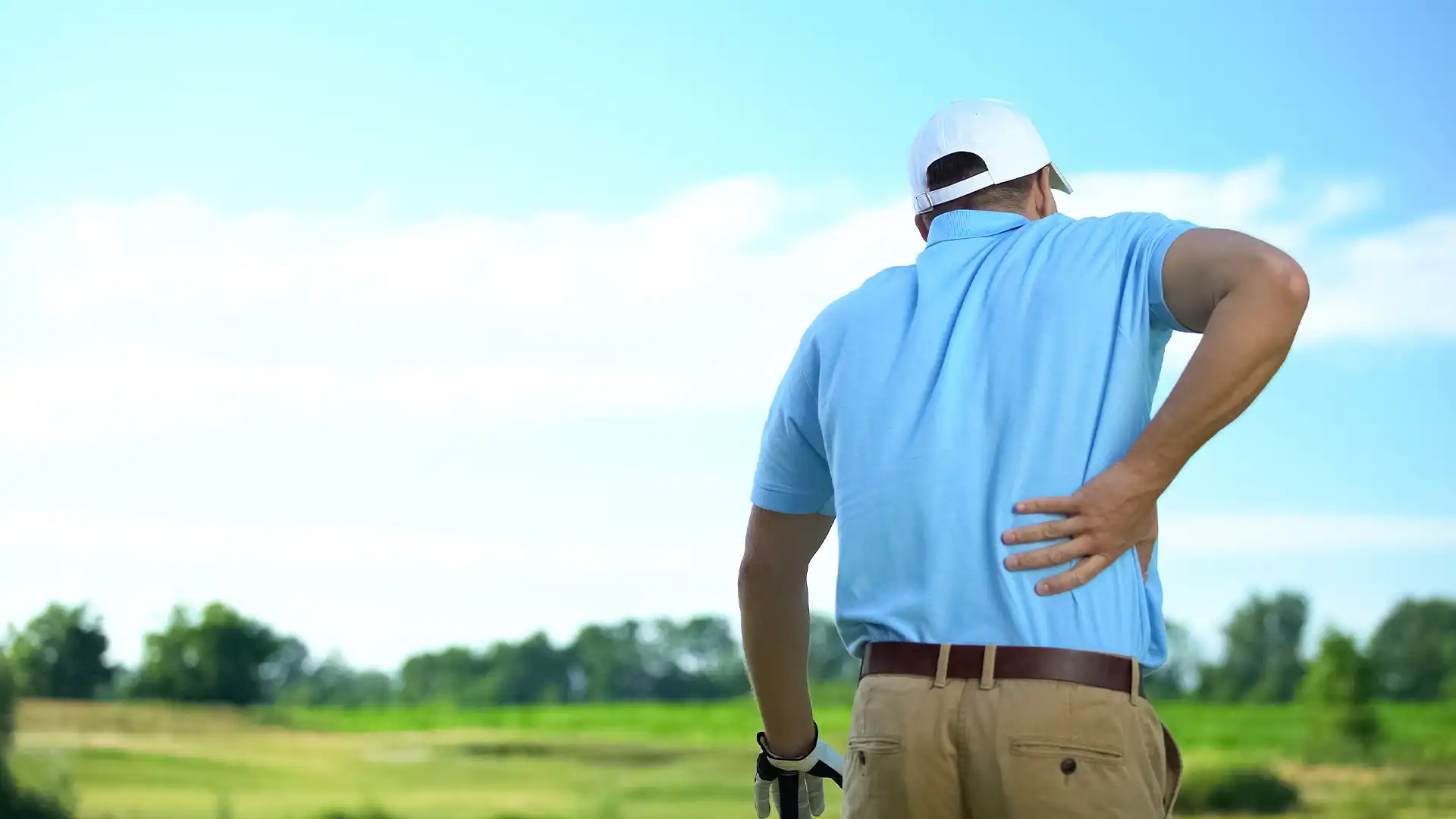
If you've been told you have "sciatica," you're not alone — and you're probably not using the most accurate term for what's happening. The shooting pain, numbness, tingling, or weakness radiating from your lower back into your leg is real, and so is the relief that's possible without surgery. The challenge is knowing where to start.
This guide breaks down what's actually driving your symptoms, which non-surgical treatments have the strongest evidence, and how our board-certified, fellowship-trained physiatrists and pain management physicians approach lumbar radiculopathy — the clinical term for what most patients call sciatica.
What Is Sciatica—and Why Calling It “Radiculopathy” Actually Matters
"Sciatica" is a colloquial term that describes symptoms, like the pain along the path of the sciatic nerve, rather than a diagnosis. The underlying cause is typically lumbar radiculopathy: irritation or compression of a spinal nerve root, most often due to a disc herniation, bone spur, or spinal stenosis.
The distinction matters because treatment depends on identifying the specific nerve root involved and the structural cause driving its irritation. A patient with L4 radiculopathy secondary to foraminal stenosis requires a different clinical approach than one with L5 root compression from an acute disc herniation. Precise diagnosis leads to targeted treatment — and better outcomes.
Non-Surgical Treatments for Sciatica That Actually Work
Most patients with lumbar radiculopathy respond well to non-surgical care when it is properly matched to their underlying diagnosis. Some effective, evidence-supported options include:
- Epidural steroid injections (ESIs): Delivered under fluoroscopic guidance to reduce nerve root inflammation at the site of compression — a highly effective short-term intervention when appropriately timed.
- Epidural PRP: An emerging regenerative option for patients with radiculopathy related to disc herniation, aimed at promoting tissue-level healing rather than simply managing inflammation.
- Physical therapy: Structured rehabilitation to correct movement patterns, reduce mechanical load on the spine, and support long-term recovery.
- Oral medications and activity modification: Non-opiate adjuncts that can reduce pain during the acute phase to allow participation in rehabilitation.
Image-guided, physician-performed procedures remain central to our approach because precision matters when treating structures as sensitive as spinal nerve roots.
What to Expect During Sciatica Recovery
Recovery timelines vary depending on the severity of nerve compression, the duration of symptoms, and the patient's response to initial treatment. However, a few realistic expectations include:
- Most patients notice measurable improvement within two to six weeks.
- Nerve pain, numbness, tingling, or weakness — may resolve more quickly than axial back pain.
- A structured physical therapy program significantly improves long-term outcomes and reduces the risk of recurrence.
- Recovery is not always linear; some patients plateau briefly before continuing to progress.
Common Sciatica Mistakes That Delay Relief and What to Do Instead
A delay in diagnosis and missteps in early management are among the most common reasons patients struggle unnecessarily:
- Resting too long: Prolonged bed rest typically worsens outcomes. Guided, progressive movement is part of the treatment.
- Skipping imaging or nerve studies: Without an accurate structural diagnosis — and sometimes an EMG or electrodiagnostic test to assess nerve function — treatment is guesswork.
- Treating symptoms without identifying the source: Masking pain without addressing nerve compression delays recovery and may allow the underlying condition to progress.
- Delaying specialist care: If symptoms are not improving with primary care management within four to six weeks, evaluation by a physiatrist is warranted.
How do Our Physiatrists Help with Sciatica
Physiatrists, or physicians specializing in Physical Medicine and Rehabilitation, are uniquely trained to diagnose and treat the full spectrum of spine and musculoskeletal conditions without surgery. At Desert Spine and Sports Physicians, our board-certified, fellowship-trained physiatrists and pain management physicians combine detailed diagnostic evaluation, electrodiagnostic testing when appropriate, and image-guided interventional procedures to create individualized treatment plans.
Our goal is not simply pain reduction. It is restoring your ability to move, work, and live without the limitations that nerve pain creates.
Start Getting Lumbar Radiculopathy Relief Today
Desert Spine and Sports Physicians treats lumbar radiculopathy across six Arizona locations, including Phoenix, Scottsdale, Mesa, Peoria, and Gilbert. If shooting leg pain, numbness, or weakness has been limiting your daily life, a thorough evaluation is the right next step.
Request an appointment today and take the first step toward lasting, non-surgical relief.

 June 26, 2026