Numbness. Tingling. Muscle weakness. Does this sound familiar?
When symptoms like these don’t point to a clear cause, electrodiagnostic testing can help uncover what’s happening beneath the surface. An electromyography test, or EMG, paired with a nerve conduction study, gives physicians a closer look at how your nerves and muscles work.
We use EMG testing at Desert Spine and Sports Physicians to move beyond guesswork, helping pinpoint the source of symptoms and guide the next step in care.
Understanding EMG Testing: The Basics
Electromyography measures the electrical activity of muscles at rest and during contraction. Because muscles rely on signals from nerves, an abnormal electrical pattern indicates whether a problem stems from the muscle itself or from the nerves controlling it.
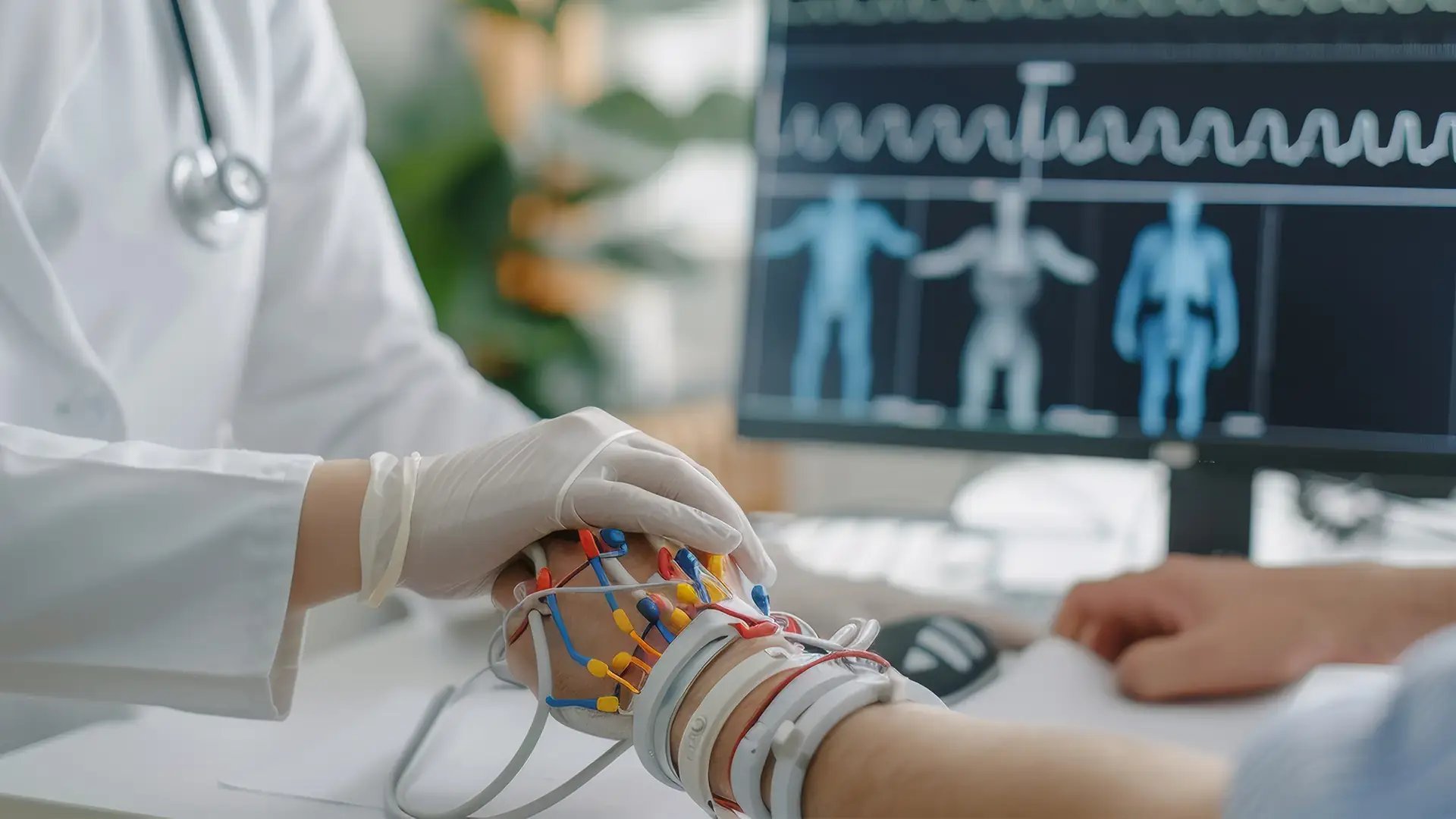
EMG is performed alongside a nerve conduction study (NCS). When these tests are done together, it’s known as electrodiagnostic testing. EMG monitors muscle activity while NCS measures how quickly and effectively electrical signals travel through your nerves. Combined, they provide a more complete picture of neuromuscular function.
Your provider may recommend electrodiagnostic testing if you have:
- Persistent numbness or tingling
- Muscle weakness
- Pain that radiates through your arms or legs
Nerve-Related Conditions EMG Can Diagnose
EMG and nerve conduction studies can be used to detect peripheral neuropathy, a condition where the nerves outside the brain and spinal cord are damaged.
This type of neuropathy primarily affects the hands and feet and may be related to:
- Diabetes
- Vitamin imbalances
- Chronic health conditions, especially autoimmune diseases
Carpal Tunnel and Compression Syndromes
Electrodiagnostic testing plays a key role in diagnosing carpal tunnel syndrome, where the median nerve at the wrist is compressed.
EMG can also help identify other compression neuropathies, such as:
- Cubital tunnel syndrome (pressure on the ulnar nerve at the elbow)
- Peroneal nerve compression (near the knee)
These tests help distinguish between localized nerve compression and more widespread nerve issues.
Radiculopathy and Pinched Nerves
When a nerve root is compressed as it exits the spine due to a herniated disc or degenerative changes, it can cause radiating pain, numbness, or weakness. EMG can detect signs of radiculopathy by connecting abnormal muscle activity to specific nerve roots. This checks whether symptoms are spine-related.
Muscle Disorders EMG Helps Identify
An EMG test also spots patterns associated with muscle conditions. These conditions usually produce distinct electrical signals that differ from nerve-related abnormalities, which can guide further testing and treatment.
Muscle Weakness and Fatigue Syndromes
When patients experience weakness, EMG helps determine whether the issue stems from the muscle, the nerve, or the neuromuscular junction. This includes conditions such as myasthenia gravis, where communication between nerves and muscles is disrupted.
Spinal Conditions EMG Testing Reveals
When symptoms may be coming from the spine, EMG can connect the dots.
For instance, electrodiagnostic testing can:
- Diagnose nerve compression caused by disc herniation or spinal stenosis
- Tell whether symptoms are coming from the cervical or lumbar spine
- Assess the severity of nerve involvement
- Measure nerve recovery after spine surgery
This information is valuable when imaging findings and symptoms don’t align.
What EMG Cannot Diagnose
While EMG is a powerful diagnostic tool, it has limitations. It doesn’t visualize structures like discs, joints, or soft tissue, and it can’t confirm conditions such as:
- Structural abnormalities seen only on imaging
- Certain early-stage nerve injuries
- Pain without a neurological or muscular cause
That’s why EMG is often used alongside other tests, including MRI, CT scans, and lab work. Think of it this way: Electrodiagnostic testing is just one part of a comprehensive evaluation designed to ensure nothing is overlooked.
Find Expert EMG Testing in Phoenix
Accurate diagnosis starts with the right expertise. At Desert Spine and Sports Physicians, EMG and nerve conduction studies are performed by board-certified physiatrists with advanced training in electrodiagnostic medicine. These experts focus on identifying the cause of symptoms—not just where pain shows up, but why it’s happening.
From diagnosis to treatment planning, the goal is always the same: relieve pain, restore function, and help you move forward. Schedule a consultation today to learn how electrodiagnostic testing can help clarify your symptoms and direct your care.

 April 3, 2026





.png)