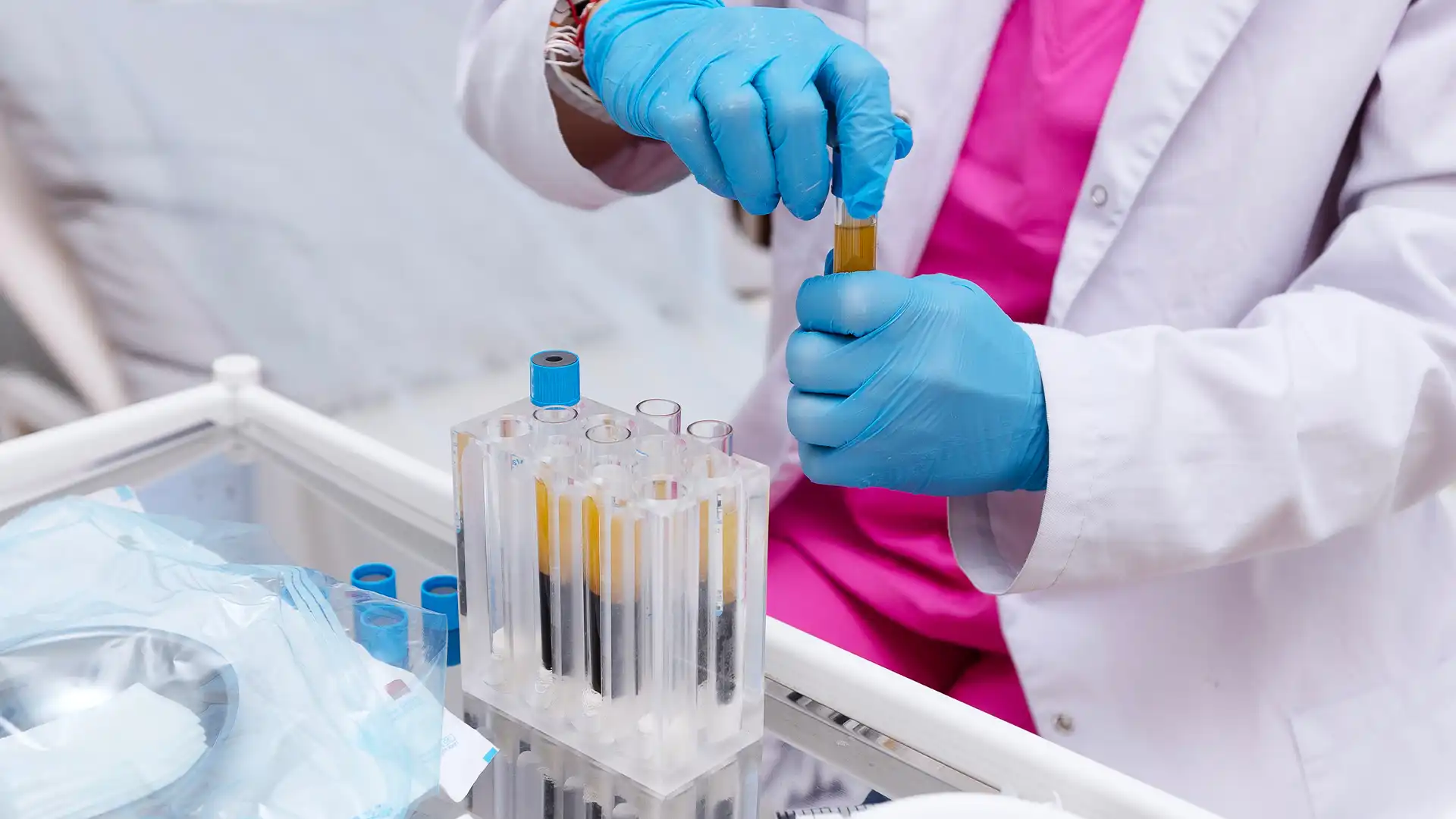
If you've been living with joint, tendon or other musculoskeletal pain that hasn't responded to rest, physical therapy, or other conservative treatments, you may be wondering what comes next — especially if surgery feels like a step you'd rather avoid. Regenerative medicine has become one of the most talked-about options in non-surgical spine and musculoskeletal care, and for good reason: it works with your body's own healing systems instead of masking symptoms.
At Desert Spine and Sports Physicians, our board-certified, fellowship-trained physiatrists and pain management physicians offer three regenerative approaches — PRP therapy, BMAC, and prolotherapy — each suited to different types of injury and degeneration.
What Is Regenerative Medicine, and How Does It Work?
Regenerative medicine refers to a category of treatments that use biologic material — most often derived from your own blood or bone marrow — to stimulate the body's natural repair processes. Rather than simply calming pain signals, these treatments are designed to trigger a healing response at the site of injury, supporting tissue repair in tendons, ligaments, joints, and other soft tissues.
All regenerative procedures at Desert Spine and Sports Physicians are image-guided, using ultrasound of fluoroscopy to place the injection where it's needed precisely.
This precision matters: accurate placement is one of the most important factors in whether a regenerative treatment can support meaningful healing.
PRP, BMAC & Prolotherapy: How the Three Regenerative Treatments Compare
While all three treatments aim to support your body's own repair processes, they differ in what they're made from, how they're prepared, and which conditions they're best suited to address.
Platelet-Rich Plasma (PRP) Therapy
PRP therapy begins with a small sample of your own blood, which is processed to concentrate the platelets. Those platelets carry growth factors that, once injected at the site of injury, help stimulate localized tissue repair.
PRP is frequently used for tendon injuries, ligament tears, sacroiliac and facet joint pain, early to moderate stage osteoarthritis, and more, and it's sometimes a starting point for patients exploring regenerative options for the first time.
Bone Marrow Aspirate Concentrate (BMAC)
BMAC uses concentrated cellular material collected from your own bone marrow, offering a higher density of regenerative material than PRP alone. This makes it a consideration for more advanced joint degeneration or soft tissue injuries and also for patients whose physician determines that additional regenerative support would be beneficial.
In most cases, physicians may recommend BMAC alongside PRP as part of a broader treatment strategy, rather than as a simple substitute for it — the right combination depends entirely on your individual evaluation.
Prolotherapy
Prolotherapy takes a different approach, using an injected irritant solution — typically a dextrose solution — to trigger a localized healing response in weakened ligaments or tendons. It's often considered for chronic ligament laxity or joint instability, particularly when structural support, rather than tissue regeneration alone, is the primary goal.
|
Treatment
|
Source Material
|
How It Works
|
Best Suited For
|
|
PRP (Platelet-Rich Plasma)
|
Concentrated platelets drawn from the patient’s own blood
|
Growth factors released from concentrated platelets stimulate a localized tissue-repair response
|
Tendon injuries, ligament tears, sacroiliac and facet joint pain, early to moderate osteoarthritis, and more
|
|
BMAC (Bone Marrow Aspirate Concentrate)
|
Concentrated cellular material drawn from the patient’s own bone marrow
|
Delivers a higher density of regenerative material than PRP to support repair in more affected tissue
|
More advanced joint degeneration or soft tissue injury and; patients who haven’t responded to PRP
|
|
Prolotherapy
|
An injected irritant solution, often dextrose
|
Triggers a localized healing response in weakened ligaments or tendons
|
Chronic ligament laxity, joint instability
|
Is Regenerative Medicine in Phoenix Right for You?
Regenerative medicine isn't a one-size-fits-all treatment, and it isn't the right fit for every patient or every condition. Whether PRP, BMAC, or prolotherapy makes sense — or whether a different approach altogether is more appropriate — depends on factors like the location and severity of your injury, your overall health, and your treatment goals.
Emerging clinical research, including studies indexed through the National Library of Medicine, continues to explore how these biologic treatments support healing, and our physicians stay closely engaged with that evidence base as they build individualized treatment plans.
Discover Which Non-Surgical Treatment for Joint Pain is Best For You
If joint, tendon, ligament, or other musculoskeletal pain or injury has been holding you back, our board-certified, fellowship-trained physiatrists and pain management physicians at one of our Arizona locations can help you understand which regenerative option — if any — fits your condition and goals.
Request an appointment today to start building a non-surgical path toward lasting relief.

 September 18, 2026